

This book is a practical guide for Indian businesses on MCA Master Data & ROC Records.Anyone who has ever wondered whether a company in India is legit — or is on the verge of doing business with a company and simply wants to know — has a free government tool they don’t know about. It is named MCA Master Data, it is simply the national official report card of all registered businesses. Here is a guide on what it is, why it is needed, how to use it and how to read between the lines so that you will never be taken aback. No legal jargon, no complicated language — the stuff you really need to know.
What Is MCA Master Data, Really?
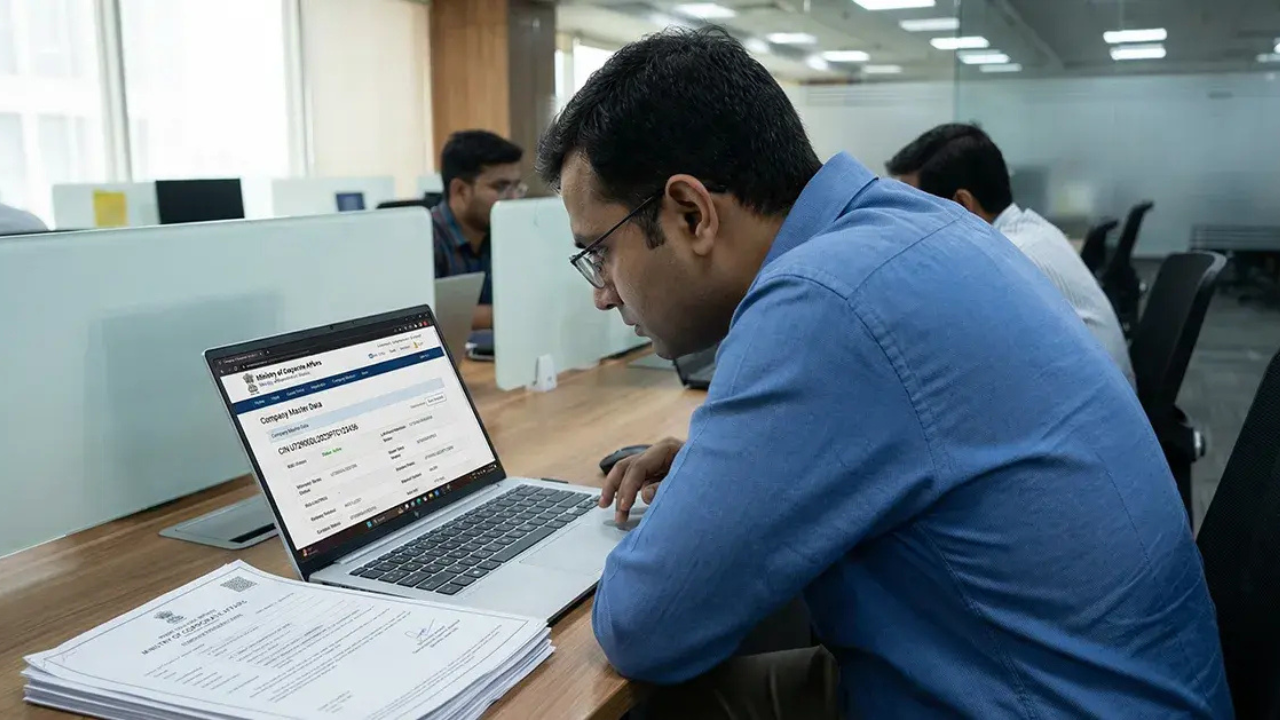
MCA Master Data is nothing but the official rating sheet of any registered company in India. It resides on the MCA’s website and provides answers to all your questions, such as, whether the company exists or who’s running it and whether or not they’re filing their paperwork correctly and on schedule.
It’s similar to a verified LinkedIn profile, only for companies. It is only issued by the government, and companies can’t simply change it to be an attractive version.
What’s Inside?
- Name of the company and its 21-character ID (CIN).
- Financial year — the year the company was established
- Company status (Active, Struck Off, Under Liquidation etc.).
- Registered Office: The place where the company is established.Registered Office – The address of the Company in the legal sense.
- Directors and authorized signatories (those in charge).
- Filing and compliance — if they have been timely filing and complying with returns
- In what ways does this matter to you?
- This data could save you from a major hassle if you’re an investor, a vendor, even a job seeker, or simply someone in the midst of signing a major contract.
Why Should You Care?
This data could save you from a major hassle if you’re an investor, a vendor, even a job seeker, or simply someone in the midst of signing a major contract.
The Legal Side
MCA records are recognized as official evidence in court, banks and governmental bodies. This is the first place people go if there is ever a doubt about the credentials of a company.
Real-World Use Cases
- Verify vendors — Check whether any vendor has a business before you pay him/her
- Investor due diligence — There’s no writing a cheque without this first.
- The data is used in loan applications and banks pull it before granting credit.
- Fraud prevention — fake companies have mismatched or missing data.
- Compliance audits are an essential component of the audit and will be a key focus of your CA’s.
Quick Fact: Many companies fail in due diligence just because their status appears as ‘Struck Off’ or they have not filed returns for years. Always check before you commit.
To search a company on the MCA Portal: Search for a company on the MCA Portal:
Read Also: How to Set Up Dual Boot on Your PC: A Simple Step-by-Step Guide
How to Search a Company on the MCA Portal
The good news? No need to be a CA or pay others to do. It is free and open to all.
What You Need
- Company name, or
- CIN (Corporate Identification Number), or
- The name of the LLP (if it is a limited liability partnership).
Step-by-Step
- Log in to the MCA portal.Log in to MCA portal.
- Click on “MCA Services”
- Click on “View Company/LLP Master Data”
- Enter the name of the company or CIN
- Solve the captcha
- Click search — the information will appear immediately.
- That’s it. Basic info is free and doesn’t require a login.
ROC Records: The Deeper Layer
Master Data provides you the snap. The complete picture is available on the ROC (Registrar of Companies) records.
These are the genuine documents that have been submitted by the company during the years under the Companies Ac
Types of ROC Filings
- Annual returns – the annual information given to shareholders and the structure.
- Financial Statements: P&L accounts, balance sheets
- Changes in the director.Director change (new directors and/or resignations)
- Charging of loans, borrowings and securities.
- Resolutions of the board and the key shareholders are major decisions that are formally recorded.
What They Actually Tell You
- Is the company in good financial standing or in a difficult one?
- Are they on time to file or always late?
- Has there been any recent restructuring of the company?
- What is the size of their debts?
Red flags to look out for: Late filing can signify cash flow issues. An unstable internal environment may indicate many changes of direction. If the company already has a lot of debt, you’ll be able to tell from its charge record.
Key Terms Decoded
| Term | What It Means |
| CIN | The unique 21-character ID — like Aadhaar for companies |
| Company Status | Active = good. Strike Off = company no longer exists legally |
| ROC | The regional office that registered the company |
| Authorised Capital | The maximum capital the company is allowed to raise |
| Paid-up Capital | What shareholders have actually invested so far |
| Directors | The people legally responsible for running the company |
Who Uses This Data?
It is used by businesses for:
- Onboarding new vendors
- Before making a joint venture, validate partner(s) first.
- Conducts risk assessments prior to significant purchases.Performs risk assessment prior to major purchases.
It is used by individuals for:
- Determining whether or not a prospective employer is a scam
- Carry out research prior to investing in unlisted companies.
- Detecting fraud or shell companies
What MCA Data Cannot Tell You
It is strong but not without flaws. The problem is that:
- No live financials — only annual reports
- No internal operations — No idea on how the team works or the culture like it.
- No pending litigation details — No active litigations are listed here.
- Data delays – sometimes there are weeks and months between filing and data reflecting
Before relying on MCA data, follow the best practices below:
- Always check the CIN; even if it is a small mismatch, it can be fraud
- Look at the most recent filing date – if it is years old, there’s something amiss
- Match director names (double-check director names)
- Pay attention to its status – it should be “Active”.
- Never rely on MCA data alone – combine with financial, credit, and background checks
Best Practices Before You Rely on MCA Data
- If you are considering using MCA data, there are a number of best practices you should follow.
- Never assume that the CIN is correct, even if it is only one character off — if it’s wrong it could be fraud!
- Look at the most recent filing date; if it is, say, years ago, then something must be wrong.
- Verify the name of the director — ensure that it matches the name used by the company
- Pay attention to the status, you should see “Active”
- Do not rely exclusively on MCA data — combine with financial analysis, credit reports and background checks
Final Word
Some of the best free tools for anyone who’s doing business in India are MCA Master Data and ROC records — but most people don’t bother to check them out. Before signing a deal, hiring a vendor or making an investment, take a few minutes to do some research on the MCA portal to avoid scams, dead companies, and months of legal hassles. But don’t end there; accompany it with credit checks, financial checks and discussions with people who have real experience working with the company. Smart decisions are the ones that involve synthesizing hard data and real-life experience, so don’t start at the end of the MCA portal, but rather at the beginning. Trust is paramount in a marketplace like this and understanding the content of these records will always put you ahead of the game.
Read More: GFMS Portal: Complete Guide to Registration, Login, Features, Eligibility & Benefits
